
Southwest Asia Uncovered: Destinations That Go Beyond Thailand
Asia offers way more destinations than just Thailand, and you can find suggestions of countries to have fun and be amazed.
Asia to travel beyond Thailand!
If you’re into a trip with adventure, good food, surreal landscapes, and budget-friendly prices, Thailand is probably already on your radar — and for good reason.
But let’s be honest: there’s life beyond Thailand! Southeast Asia (Southwest Asia, in the more touristy sense) is full of destinations just as amazing.
Vietnam—Street food, history, and jaw-dropping landscapes
Vietnam is a very complete destination, from Hanoi to Ho Chi Minh, mixing lots of history with raw nature, incredible street food, and super nice people.
Pho, banh mi, spring rolls… every corner is a flavor explosion at ridiculously low prices.
If you love nature, get ready to fall in love with Ha Long Bay (one of the most surreal places you’ll ever see) and Ninh Binh, a less touristy but equally beautiful version.
Want beaches? Go to Da Nang. Culture? Hue and Hoi An are must-stops.
Cambodia—A country that will move you
The country is known for the Angkor Wat temples (one of the largest religious complexes in the world) ut offers much more than that.
Phnom Penh, the capital, brings a reality check with its history marked by the Khmer Rouge regime. It’s heavy, but essential to understand the Cambodian people.
And yes, the country also has beaches! Koh Rong and Koh Rong Samloem are chill islands with white sand and clear water. And the best part? Way less crowded than Thailand’s beaches.
Laos—Pure tranquility
Laos is a country to truly slow down in in, being one of the least visited in the region — which is exactly what makes it special.
The vibe here is total zen. Luang Prabang is a charming town by the Mekong River, full of Buddhist temples and unforgettable sunsets.
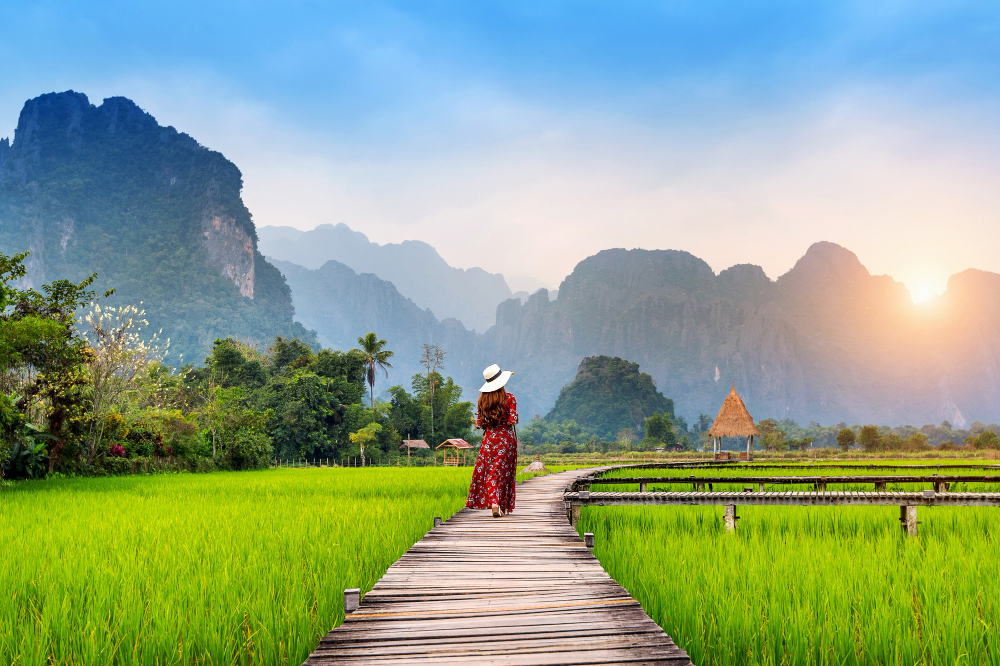
If you want a more “roots” experience, head to Vang Vieng. The town was once famous for endless parties, but now it’s a paradise for nature lovers: caves, blue lagoons, and trails surrounded by karst mountains.
Philippines—A breathtaking archipelago
If what you’re really after is beaches, pack your backpack and head to the Philippines. With over 7,000 islands, the country has movie-like scenery, crystal-clear water, and more of a “Pacific islands” vibe than “Southeast Asia.”
Palawan and El Nido are the big hits — and for good reason. But if you want to go off the tourist track, explore Siargao (perfect for surfing and nature) or Bohol (with its famous Chocolate Hills).
Malaysia—Where modern and traditional meet
Malaysia is like a well-made fusion of cultures. It has Malay, Chinese, Indian, and British influences, which makes everything more interesting — from architecture to food.
Kuala Lumpur, the capital city, blends sleek skyscrapers with charming old districts all in the same place.
But don’t stop there. Head to Penang to try some of the best street food in Asia, and explore Langkawi for beautiful beaches and a more relaxed vibe.
Indonesia—A way Beyond Bali
Indonesia is another country people often reduce to “Bali.” But the country has over 17,000 islands!
Want to see real dragons? Go to Komodo. Want to surf? Go to Lombok. Want an active volcano? Mount Bromo and Kawah Ijen are waiting for you with incredible trails and otherworldly views.
And if you’re into culture and tradition, go to Java — Yogyakarta is the country’s cultural heart, with palaces, temples, and art everywhere.
Myanmar (Burma)—Beauty and challenges
Myanmar is a country that mixes deep spirituality with a troubled political scene.
Since opening up to tourism, it’s attracted travelers looking for authenticity. Bagan, with its thousands of temples spread across a vast plain, feels like something out of a dream.
Before visiting, check the political situation, since the country has faced instability in recent years.
Tips for exploring beyond Thailand
- Check visa and vaccine requirements. Some countries require advance visas or specific vaccines.
- Get travel insurance. Especially if you’ll be hiking, diving, or doing more “radical” activities.
- Get your stomach ready. The food is amazing, but the spices are strong. Bring some meds just in case.
- Be respectful. Each country has its own cultural norms. Taking off your shoes before entering temples or not touching people’s heads are just a couple of basic rules.

Related content
Intelligent Strategies for Student Loan Borrowers
Have you put together a strategy to systematically tackle your student loans? Discover tips on how to stay organized and keep stress at bay!
Keep reading * You will remain on the current websiteIntelligent Strategies for Student Loan Borrowers
Keep reading You will remain on the current website